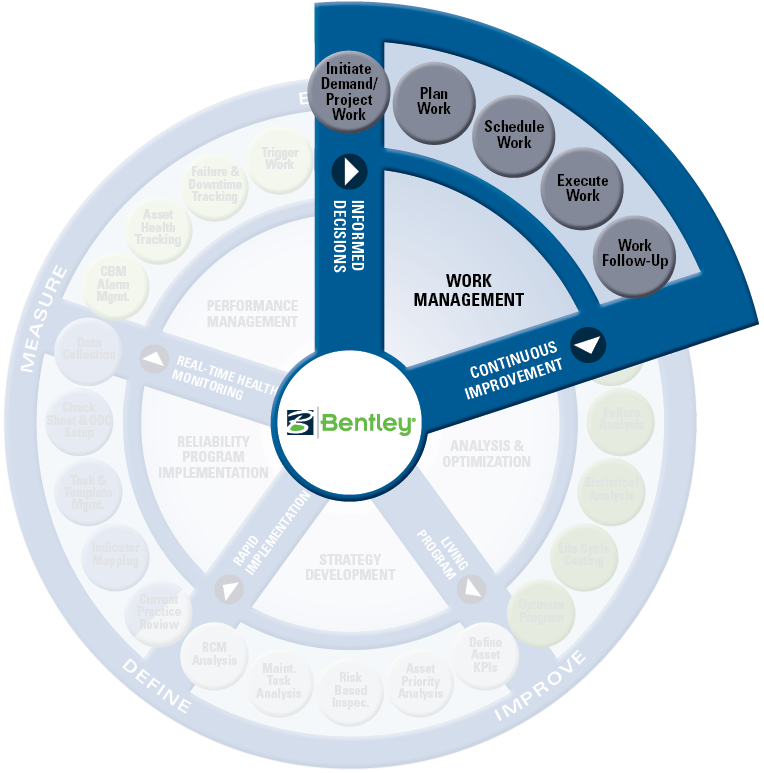
Work can come from approved work requests, strategy development analyses, or your asset reliability program. After your organization has identified the work that should be done, you can plan the work so that it will be carried out as efficiently as possible.
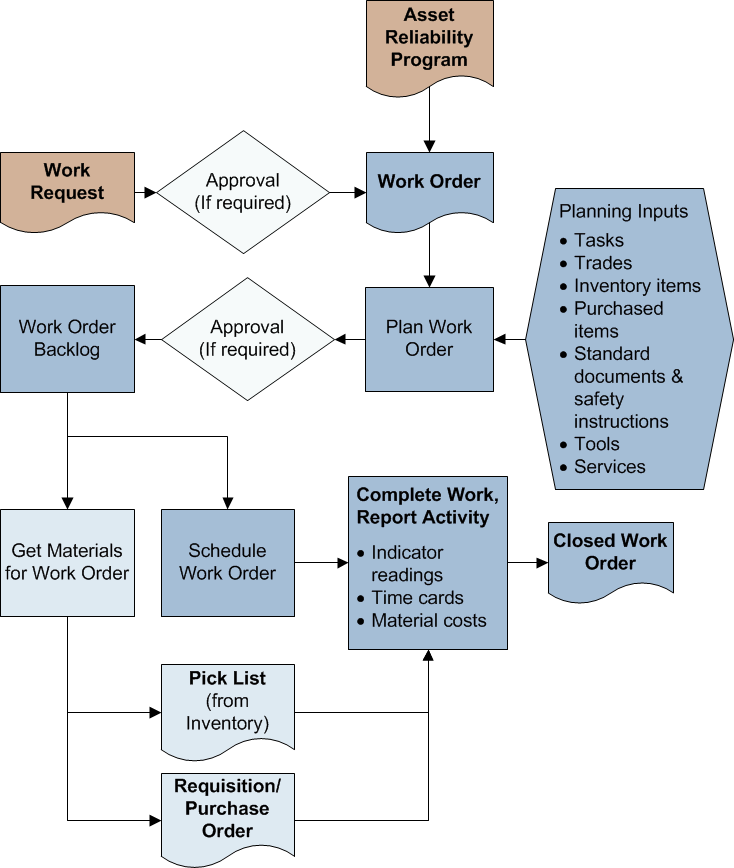
APM work orders have a well-structured life cycle that moves from initial creation through planning, approval, scheduling, assignment, execution, and closure. However, the work order life cycle is also flexible: you can choose what parts of it to use at the global level or on a case-by-case basis. The diagram below summarizes the work order life cycle.