|
|


Introduction to Performance Indicators
What Are Key Performance Indicators?
Percentage = (Number of completed work orders where the planned completion date was in the last month) ÷ (Total number of work orders where the planned completion date was in the last month) x 100
Performance Indicator Formulas in Stored Procedures
Performance Indicator Formulas in VB.NET or C# Scripts
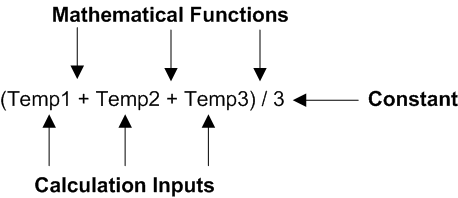
Calculation Inputs
Filter-Based Calculation Inputs
Count-Type Inputs
Percentage = (Number of completed work orders where the planned completion date was in the last month) ÷ (Total number of work orders where the planned completion date was in the last month) x 100Aggregating Filter-Based Inputs
The same result could also be achieved using a more complex formula with a different aggregate type:Using Numeric and Non-Numeric Data Types as Inputs
How Calculation Inputs are Used in VB.NET and C# Scripts
Aggregation Types
Array Aggregation
First Aggregation Type
Last Aggregation Type
Filtering Criteria
You can use filters to create a subset of a group of items for a table configuration, a calculation input in an indicator, a purging rule, or a download configuration for a remote computer. Each filter can be composed of multiple criteria. For each filtering criterion, consider the following:Boolean Logic for Table Configurations and Calculated Indicators
Logical Operators and Filter Groups
When you use more than one filtering criterion, you must establish the relationship between them. APM supports two Boolean operators: AND and OR.
Order of Operations
If you have multiple criteria in one filter group, the order in which you arrange the filtering criteria also affects the results. When there are three or more filtering criteria, APM uses the order of operations rules to determine the order in which to evaluate them. Criteria from the same filter group are evaluated together, with criteria that are connected with the AND operator evaluated before OR operators.Units of Measure and Calculations
Integers and Averages
Units of Measure
Functions in VB.NET and C# Scripts
VB.NET
C#
Calculation Inputs and Argument Names
Function Examples
Using a String in a Calculation
VB.NET
C#
Using an Enumerated Attribute in a Calculation
VB.NET
C#
Using a Boolean Attribute in a Calculation
VB.NET
C#
Using an Array in a Calculation
VB.NET
C#
Number of Values in an Array
VB.NET
C#
Using a Date Attribute in a Calculation
VB.NET
C#
KPIs in a Multiple-Currency Environment
Cumulative and Descriptive KPIs
Triggering a Calculation
What Happens When the Calculation is Triggered?
Performance Indicator Alarms
Indicator Types for Performance Indicators
Performance Indicator Templates
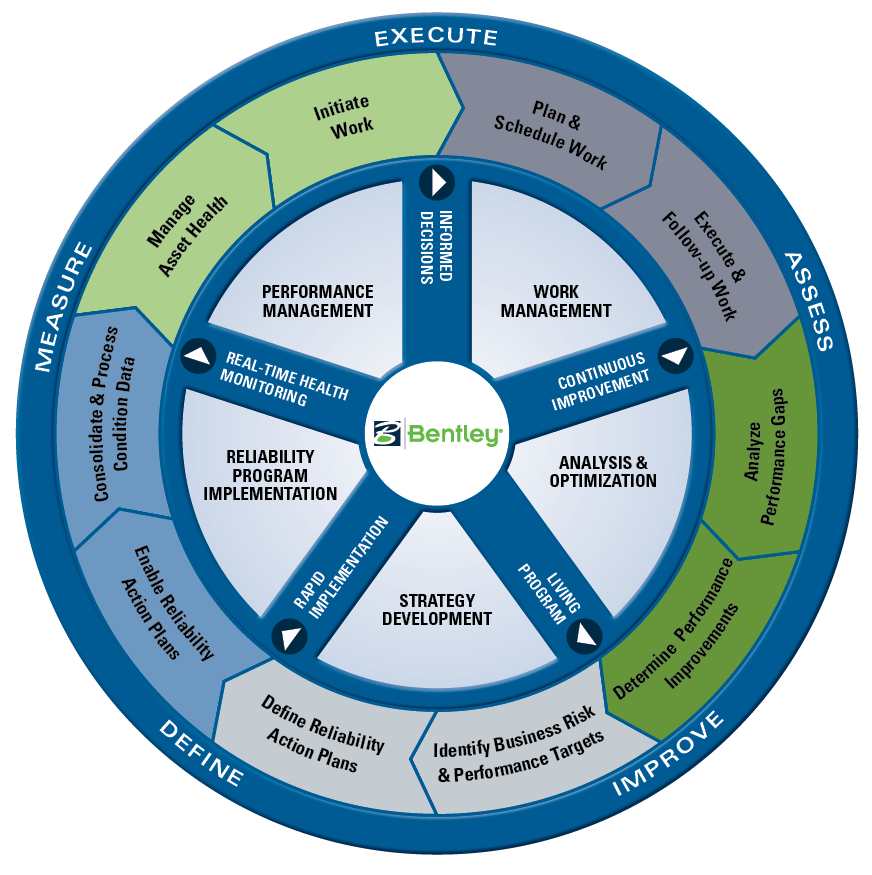
Asset Reliability Process Elements and KPIs