|
Setting up Characteristic Mapping for Assets
You can view characteristics in the Site window. Select the Assets view, Characteristic tab to access several configurations listing characteristics for the site, this site and above, or this site and below. In the Asset window, select the Properties view, Characteristics tab to view the asset’s characteristic values.This topic explains how to set up asset characteristic mapping. When your APM implementation is being set up for interoperability, characteristic classes and characteristics are imported into APM using data loaders or other methods. (AWEIS also adds characteristics when assets are sent from the CMMS.) However, you can also manually create characteristic classes and add their characteristics, as explained in this topic. See To Create a Characteristic Class and Add Characteristics.Once characteristic classes have been added to APM, you can create map sets, generate mapping values, and review mappings. For example, ensure that date formats and quantity precision values are correct in mappings. See To Create a Map Set.The next step is to link asset types to their corresponding characteristic classes and map sets. For example, you might link the Air Switch asset type to map sets for air switches and general asset information. See To Link an Asset Type to a Characteristic Class.Be sure to set up the “Map Characteristic Values to Asset Properties” scheduled action to execute regularly (at least once a day) to keep the values current. For more information, see Scheduling Actions.Tip: You can also map characteristics manually for the site. In the Site window, click the Tools menu, Assets, and then Map Asset Characteristics. All mapped characteristics on assets are populated with available values.Tip: In the Asset window, you can complete the mapping manually, typically for testing purposes. In the Tools menu, click Characteristics, and then Map Values. Note that you can lock and unlock characteristic mapping using options in this menu.At the enterprise level, you can set characteristic mapping defaults to allow AWEIS to create characteristic instances and to set the date format. The values are defaulted on Characteristic Mapping dialogs, where they can be changed. For more information, see Setting Defaults for Characteristic Mapping.Note: To use this functionality in APM, you must first enable feature 23. In the Enterprise window, select the Customization Center view and the Enabled Features tab. Click Browse, select “Asset characteristics”, and click OK. If APM is running as a smart client, click Refresh Enabled Features on the server. Then restart the client to use the functionality.You can also create characteristic mapping for requests for work, interop work requests, interop work orders, and solution packages. See Setting up Characteristic Mapping for Interop Work Documents.To Create a Characteristic Class and Add Characteristics
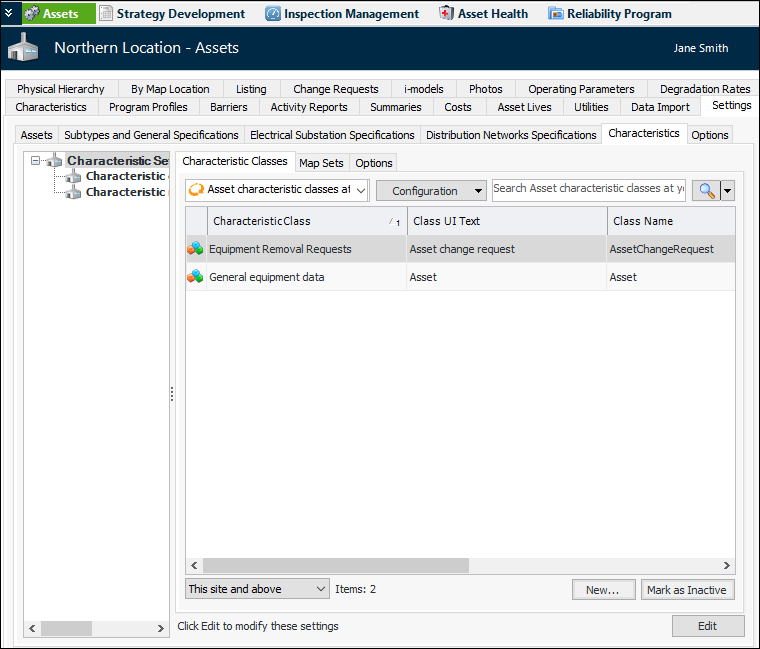
1. In the Site window, select the Assets view, the Settings tab and then the Characteristics tab. For example:By default, the Characteristic Classes tab shows characteristic classes for the enterprise based on the Asset and AssetChangeRequest classes.Tip: You can also create characteristic classes, characteristics, and map sets at the enterprise level. In the Administration menu, click Application Settings. In the Application Settings window, select the Characteristics tab.
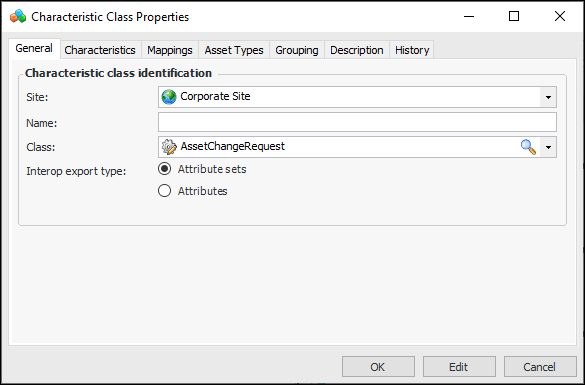
2. Click New. The Characteristic Class Properties dialog appears:
6. Set the interop export type. The default selection, Attribute sets, is appropriate for most implementations of characteristic export. The Attributes option exports characteristics as unrelated attribute elements. This mechanism is typically used to extend the Mimosa schema beyond the predefined fields.
7. Select the Characteristics tab.
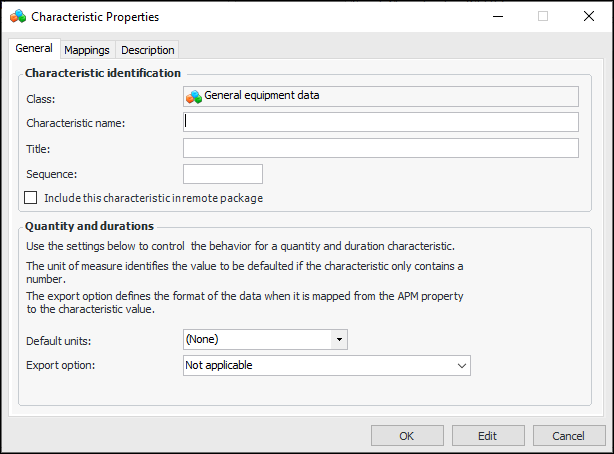
8. For each characteristic that you wish to add, click New. The Characteristic Properties dialog appears. For example:
12. In the Quantity and durations area, you can set options that determine how exported information is presented in the CMMS characteristic:
• Default units – If the characteristic value uses a number format, select the unit of measure to be used for this characteristic’s values
• Export option – You can specify whether only the number is exported or the number and its unit of measure are exported
13. Select the Description tab to add more information about the characteristic.
14. Click OK to save the characteristic and close the dialog. The characteristic is added to the table.
15. When you have added all of the characteristics, click OK to save the class and close the dialog.To Create a Map Set
1.
2.
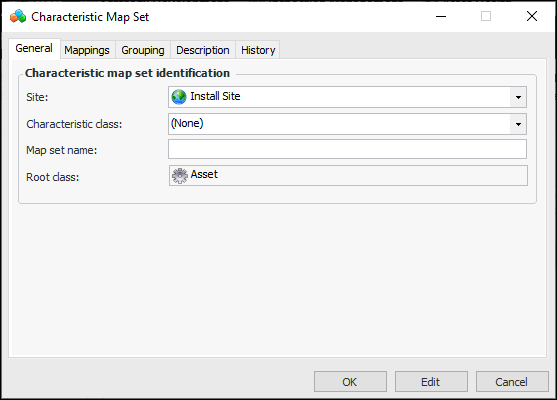
3. On the General tab, the top site is selected so that the map set is available for all child sites. You can select another site, if required.
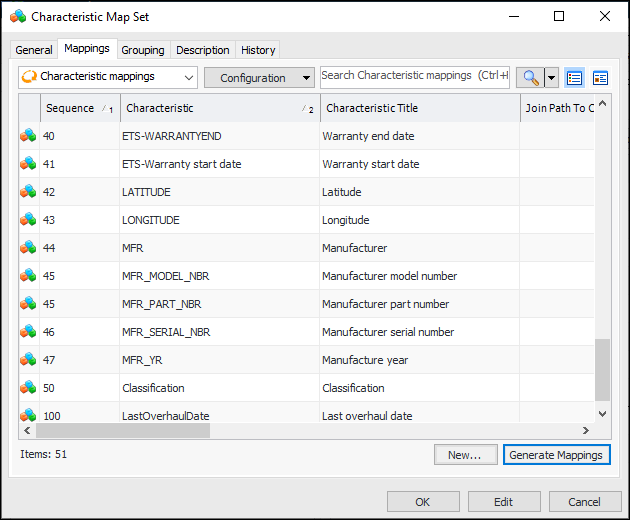
6. Select the Mappings tab and click Generate Mapping. APM creates mappings for the characteristics identified in the characteristic class. For example:
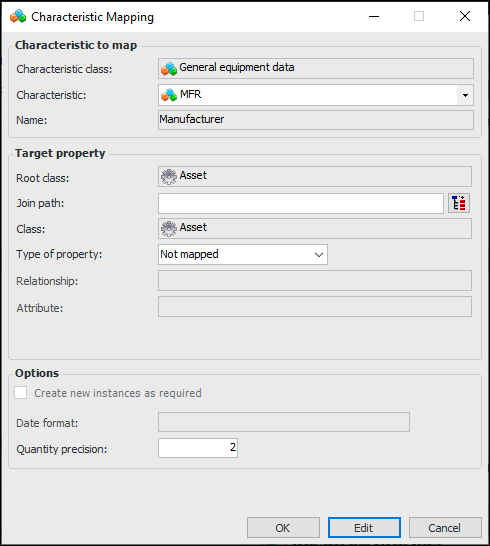
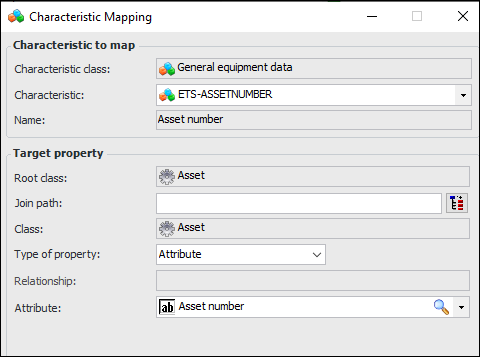
7. Open each Characteristic Mapping dialog and click Edit. For example:Asset Number
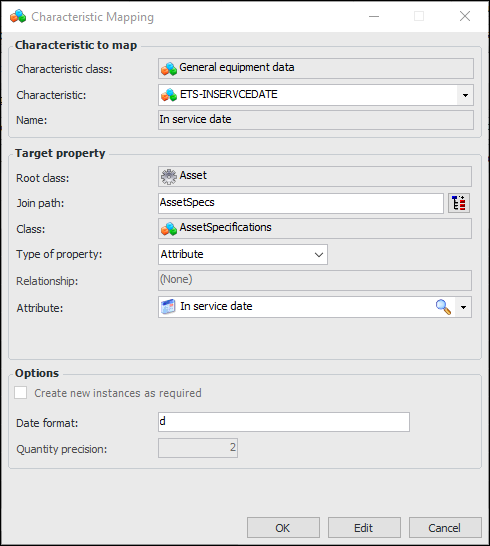
In Service Date
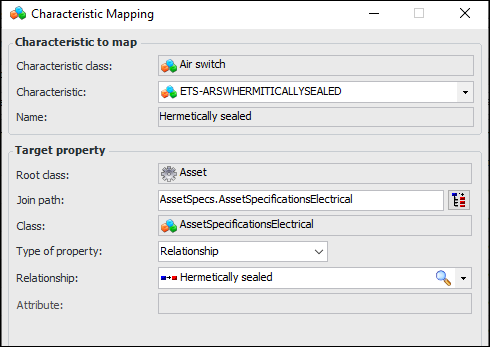
Hermetically Sealed
9. In the Options area, select settings as appropriate to the mapping:
• Create new instances as required is available for a relationship to a class that is owned or scoped by Enterprise or Site, for example, Material type or Work center.
• Date format is available when the target property is an attribute that uses the DateTime data type. You can enter any format that complies with standard or custom .NET formatting rules. For example:See the Microsoft topics for Standard date and time format strings and Custom date and time format strings.Note: The default values for these options are set for the enterprise in Application settings. In the Enterprise window, click the Administration menu and then Application Settings. In the Application Settings window, select the Characteristics tab and then the Options tab.
• Quantity precision is available for Quantity and Duration attributes. You can specify the number of decimal places supported:
10. Click OK to close the mapping dialog.
11. In the Characteristic Map Set dialog, select the Description tab to add more information.Tip: The History tab displays information about the map set’s creation and modifications.
12. Click OK to close the map set.To Link an Asset Type to a Characteristic Class
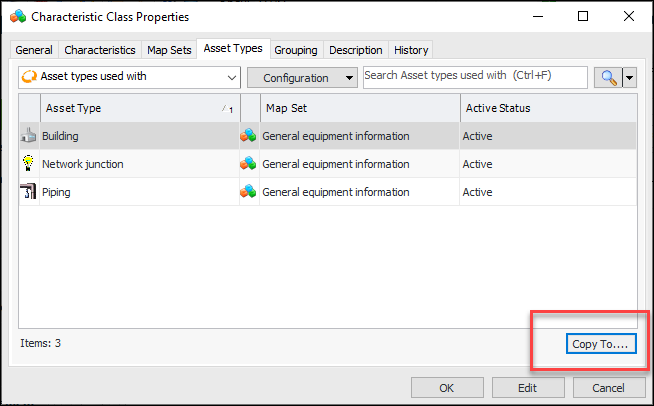
1.
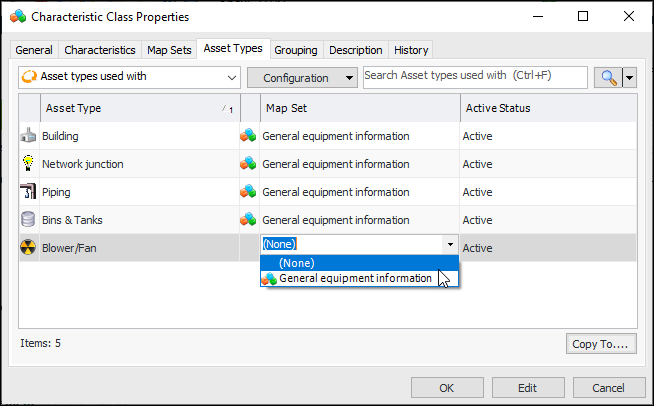
3. To quickly add a map set to each of the asset types, select the class in the table and press F2 to open the Map set field for editing. For example:Tip: The Asset Type window, Characteristics tab has a Browse button to make it easier to add characteristic classes to the type.To Set the Default Asset Characteristic Class for the Site
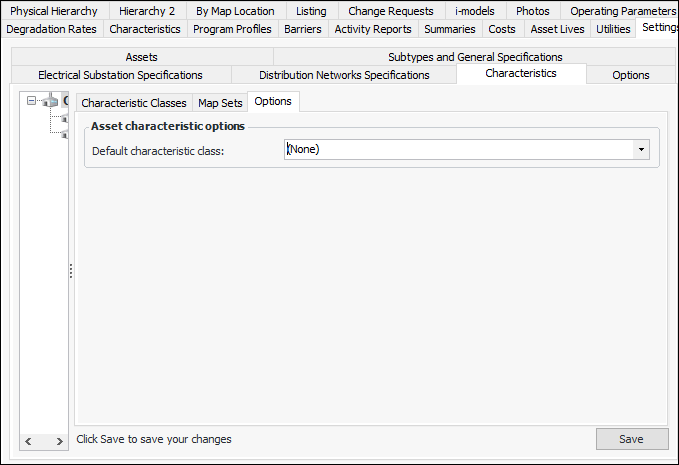
1.
2. Select the Options tab.
3.
5. Click Save.