Lag Time on Resource Demands

Resource demand lags allow you to delay the planned start time of an individual requirement (such as a trade, service, or tool) as it relates to the task’s planned start date. For example, you could enter a trade requirement for an electrician, and set it to start two hours after the task is planned to start.

Requirements that Support Lags

Demand lags are available on all time-based requirements. The table below identifies the characteristics that result in a time-based requirement.
All other requirements (for example, material issues, equipment purchases, material purchase) are not time-based and do not support lags.

Task Estimated Duration

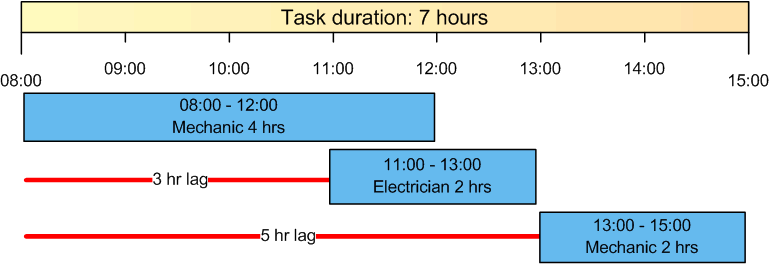
When the task’s estimated duration is calculated, it is set to match the requirement with the longest, combined lag time plus required time.
In the example below, the third requirement has the longest total planned duration, which is seven hours. This is comprised of a five-hour lag and two hours for the mechanic. As a result, the task’s duration is set to seven hours.