|
|


Viewing Indicator Collection Compliance
KPIs, Table Configurations, and Sidebar Dashboards
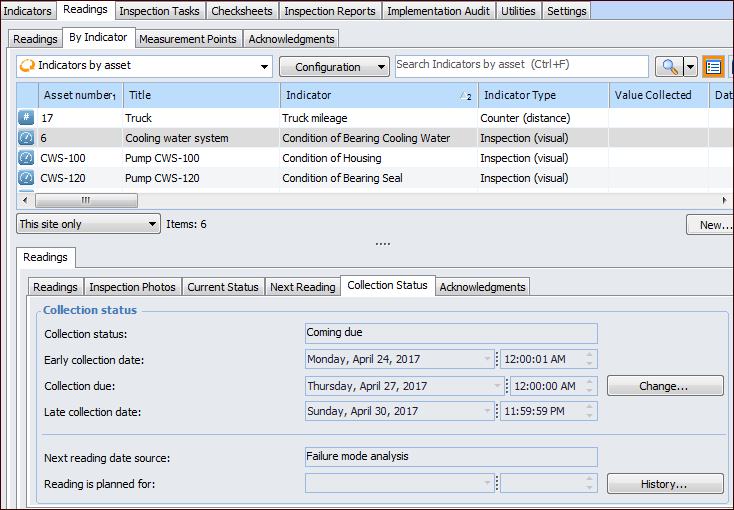
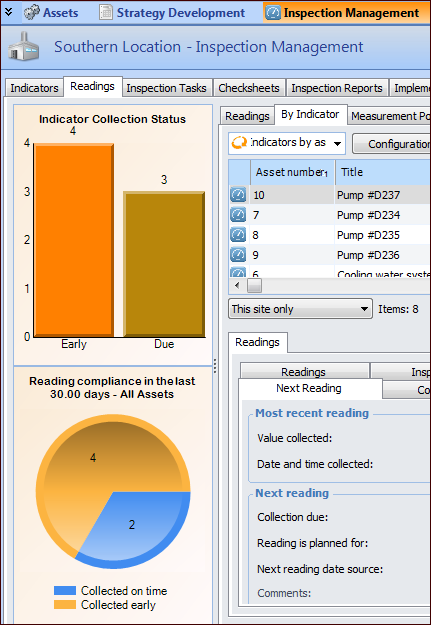
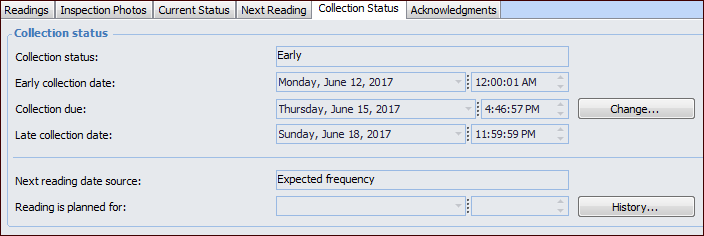
On the Site window, Inspection Management view, Indicators tab, By Asset Hierarchy tab, you can choose from these table configurations to review the collection status of indicators:Tip: These configurations are also available on the Asset window’s Inspection Management view, Indicators tab. Select either the Listing or By Asset tab.On the site’s Inspection Management view, Indicators tab, you can also select the Collection Policies History tab to view audit information about indicators with collection windows.On the site’s Inspection Management view, Readings tab, By Indicator tab, you can select an indicator in the top table to view detailed information about its readings, current status, next reading, and collection status in the Readings tab below. For example:A site sidebar provides a summary of collection activity. The “Indicator collection status and reading compliance” sidebar is available on the APM standard sidebars definition. Assign this definition to your employee record to see the Indicator Collection Status and Reading compliance charts on the site’s Inspection Management view, Readings tab. For example:Audit information about collection information is available in the Indicator window’s History view and the site’s Inspection Management view, Indicators tab.To View an Indicator’s Collection Status
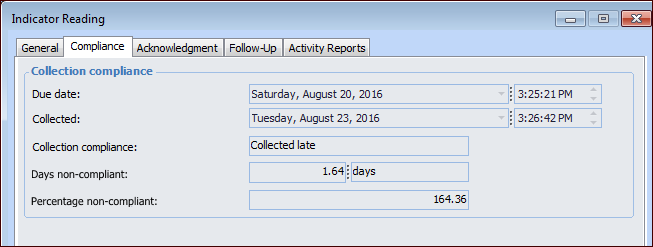
To View a Processed Indicator Reading’s Collection Compliance