Creating Calculation Inputs Based on Indicator Readings

If you are creating a calculated indicator, a performance indicator, or an indicator template for one of these indicator types, you must create one or more calculation inputs.
This topic explains how to create reading-based inputs for an existing indicator or template. To create filter-based calculation inputs, see Creating Calculation Inputs Based on Filters.
You can include data other than indicator readings as an input to a calculation. For example, you might want to use an indicator reading’s collection date in a calculation so that you can determine the length of time that has elapsed between two readings. For more information, see Creating Calculation Inputs Based on Other Reading Data.

To Create a Calculation Input

1.
2.
3.
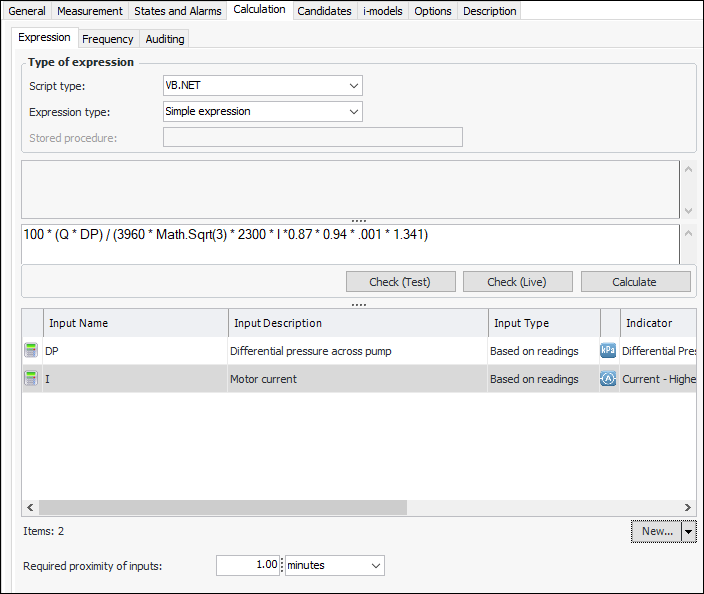
Select the Calculation tab. This tab shows the formula to be used for the indicator and any existing calculation inputs. For example:
4.
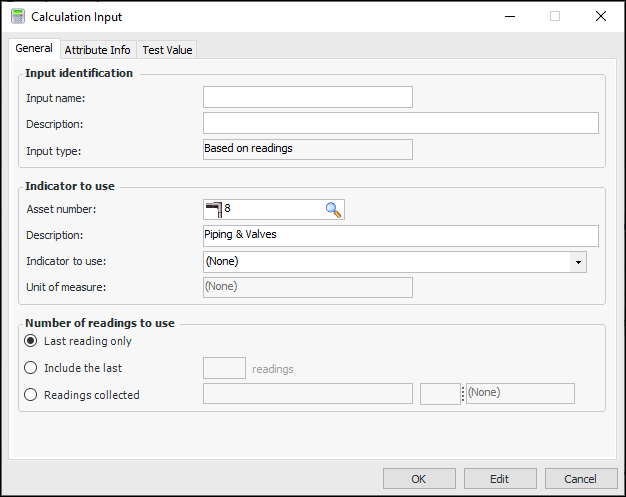
In the New list, select Indicator Input. The Calculation Input dialog appears. For example:
If the input is for a template, the Asset number and Description boxes are not available.
5.
In the Input name box, type the name of the variable in your calculation, for example “Indicator1”.
6.
In the Description box, enter a description of the indicator this variable represents.
7.
Note: On indicator templates that have reading-based inputs, you can only use other indicator templates in your calculation. When you use the template to create an indicator or KPI, you must reset the calculation inputs so that they use the correct asset indicators.
8.
Beside the Asset number box, click the browse icon. The Asset Selector dialog appears. Select the asset that owns the indicator and click OK.
Select an indicator from the Indicator to use list. You can only select from numeric- or cumulative-type indicators.
Select an option in the Number of readings to use section:
Use the last reading only: The value of the indicator’s most recent reading is used in the calculation.
Include the last [n] readings: This setting allows you to indicate the specific number of readings that you want to include to derive the input’s value (for example, use the last 10 readings).
Readings collected: This setting allows you to specify a moving time period from which all of the readings entered will be used to derive the input’s value (for example, readings collected this month, this week, in the last 10 days, and so on) The possible choices are:
9.
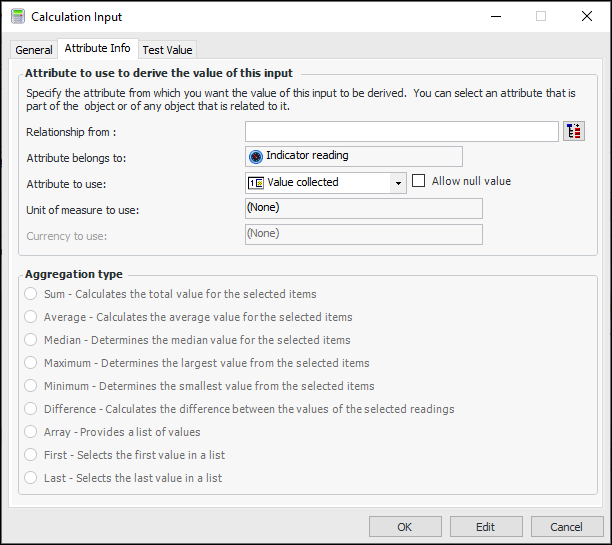
If the input will be based on two or more readings, select the Attribute Info tab to select an aggregation type.
10.
11.
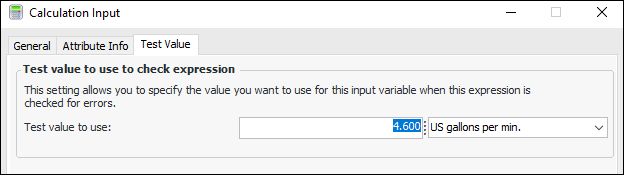
You can test the calculation by clicking the Check (Test) button on the Calculation tab of the Indicator window.
12.