Defining a Secondary Data Series for a Chart

In APM, you can define secondary data series for charts by determining the columns to chart, appearances of the data series, legend, and tool tips, as well as other advanced features.
You can also choose to mirror the primary data series for the chart.
This topic describes how to define secondary data series for a chart.

To Define a Secondary Data Series for a Chart
1.
2.
Select the Appearance tab, then the Chart tab, and then the Data Series tab.
3.
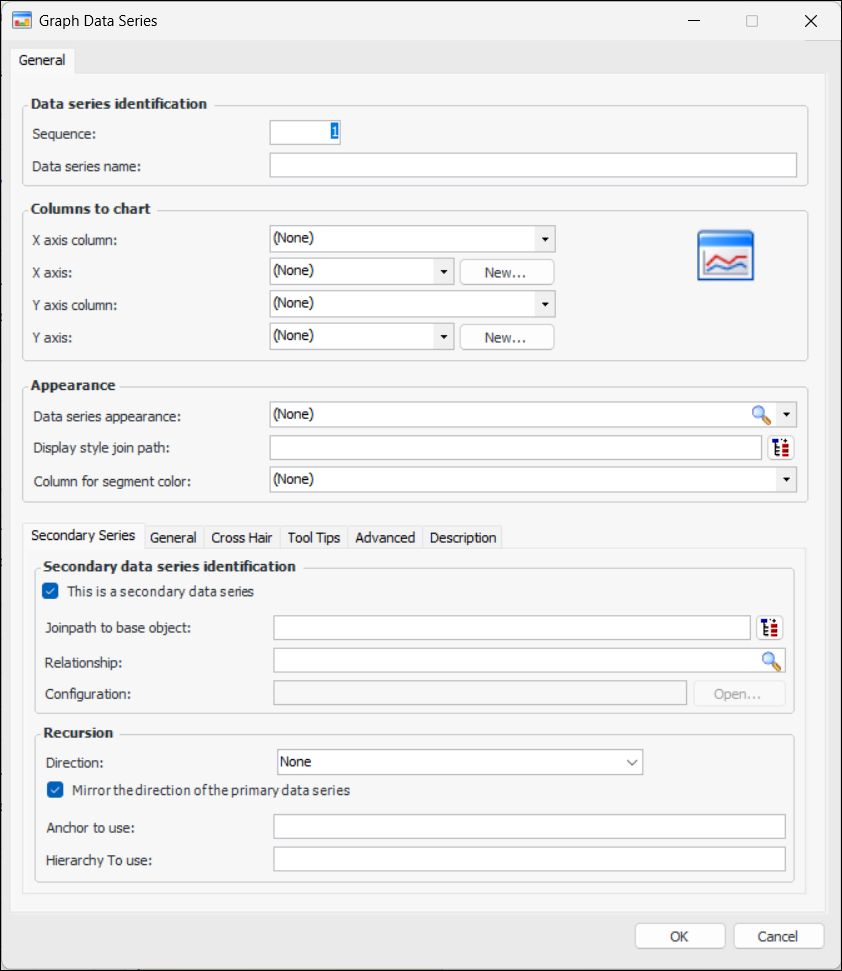
Click New Secondary Series. The Graph Data Series dialog appears, open to the Secondary Series tab.
4.
5.
6.
In the Columns to chart area, select the X axis column from the list of columns in the table.
7.
Select an X axis from the list or click New to create an X axis. For more information about creating an axis, see Defining an Axis for a Chart.
8.
9.
Select a Y axis from the list or click New to create a Y axis. For more information about creating an axis, see Defining an Axis for a Chart.
10.
In the Appearance area, select a data series appearance from the list.
11.
12.
13.
On the Secondary Series tab, click to select a join path to base object and click OK.
14.
15.
In the Recursion area, select a direction for the recursion from the list. Your options are None, Up, or Down.
16.
To mirror the direction of the primary data series, select Mirror the direction of the primary data series and then select an anchor and hierarchy to use.
17.
On the General tab, in the Legend area, you can specify a legend for the data series. Click New. For information about creating a legend, see Creating a Legend for a Chart.
18.
In the Format style box, enter a DevExpress® text pattern for the data series legend. Patterns can contain regular text and value placeholders in braces. To format numeric and date/time values, you can apply format specifiers. Use a colon to separate a placeholder and its format specifier.
Available placeholders are:
{A} argument
{V} value
For more information, see DevExpress Format Specifiers.
For general information, see Format Text Chart Elements.
19.
In the Data Labels area, select Show data labels to include labels for the chart’s data.
20.
In the Format style box, enter a DevExpress text pattern for the labels.
For example:
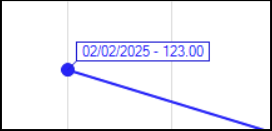
{A:d} - {V:F2}
where
{A:d} is the date
{V:F2} is the value with two decimals
The result is
The position is “Outside”, but “Centered” is also supported.
Patterns can contain regular text and value placeholders in braces. To format numeric and date/time values, you can apply format specifiers. Use a colon to separate a placeholder and its format specifier.
Available placeholders are:
{A} series point argument
{V} series point value
21.
22.
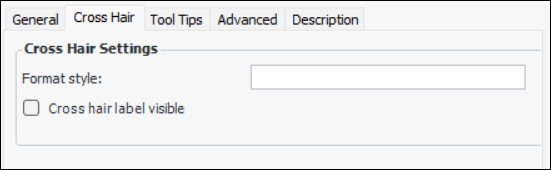
Select the Cross Hair tab.
23.
Click Cross hair label visible.
24.
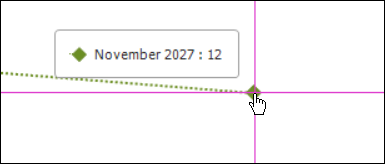
In the Format style box, enter a DevExpress text pattern to generate the cross hair label displayed on the graph data series. For example:
{A:d} - {V}
displays as:
Note: Cross hairs are not supported for pie or donut charts.
25.
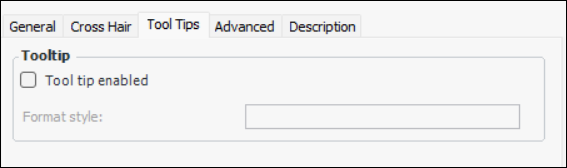
Select the Tool Tips tab.
26.
Click Tool tip enabled.
27.
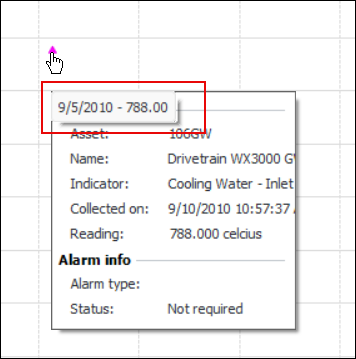
In the Format Style text box, enter the DevExpress® text pattern string that defines what is displayed in the tool tip. For example:
{A:d} - {V:F2}
{A:d} is the date
{V:F2} is the value with two decimals
The result is:
28.
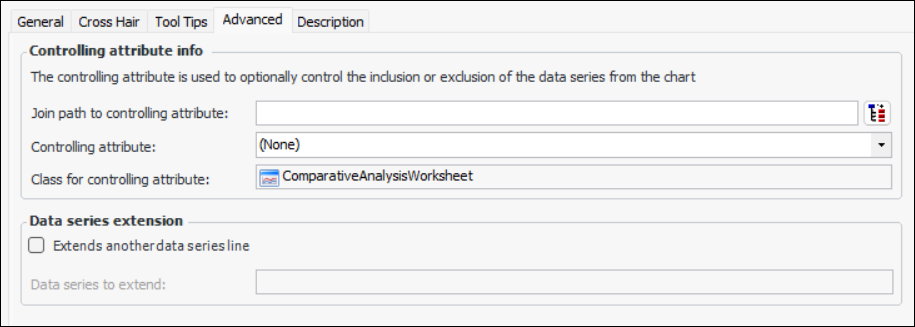
Select the Advanced tab.
29.
30.
To have this data series extend another data series in the chart, select Extends another data series line and then select the data series from the list.
31.
Select the Description tab to enter a description for the data series.
32.
33.
Repeat steps 3 to 32 for each secondary data series you want to define.