|
Creating Failure Subtypes
The APM Install database comes with two failure subtypes. When you select a subtype for a failure record, the specifications panel for that subtype is added to the Failure and Anomaly window, Properties view. This panel contains the subtype’s attributes, which can be filled in to record information about the failure.You can create custom failure subtypes or customize the APM subtypes. You can enable auditing for a custom subtype and set up its Audit Info tab so that the actions performed on the subtype are displayed in the failure’s History view.To Create Failure Subtypes
2. Select the Customization Center view.
3.
4. Click Lock for Customization.Note: If a custom Failure and Anomaly class does not yet exist, you will need to create it first. Click New Custom Class and Based on APM Class. Select the Failure and anomaly class and then click OK.Create the Subtype Class
6.
7. In the Subtype box, enter the name of your subtype and then click OK. For example, you might create a subtype called “Mechanical Damage”. The Class window for the subtype appears.Add Attributes to the Subtype
9. Select the Custom Attributes tab.
10. For each attribute, click New. The Attribute dialog appears.
11. Enter the information for the attribute and click OK. The custom attribute appears in the list.Enable Auditing for the Subtype (Optional)
12.
13. Select Audit Changes to instances of this class to enable auditing.
14. Click Generate Audit Classes. APM creates the audit info and audit details classes that store auditing information for this class. These audit classes are also displayed in the list of customized classes.
15. On the Data to Audit tab, click Browse to select each data element that you want to record for this class. Click OK to close the dialog. The elements appear in the list.
16. On the Actions to Audit tab, click Browse to select each method that you want to record for this class and click OK. The actions appear in the list.Create Panels for the Subtype
17.
18.
20. In the Properties panel, select the Text field and enter a name for the subtype’s specification panel.
22. If you have enabled auditing for the subtype, you must also include the audit data in the user interface in order to view the audit changes in the failure’s History view. Add another panel and name it “subtype - Audit Info”, where subtype is the subtype name.
23. Add a tab control with three tabs: By Event, By Data Element, and General. Design the pages according to APM standards for Audit Info panels.Associate the Subtype Panels to Failure Panels
25. In the Customization Center, open the custom Failure and Anomaly class. Click the Add menu and then Panel. The Forms Editor appears.
26. In the Join Path panel, select the join path to the new subtype (for example, SubType - Mechanical Damage).
27.
29.
31. If you enabled auditing for the subtype, add a panel to appear on the History view. Click the Add menu and then Panel. The Forms Editor appears.
32. In the Join Path panel, select the join path to the new subtype (for example, SubType - Mechanical Damage).
33.
35. In the Outline panel, select the top panel.
36. In the Properties panel, select the Text field and enter a name for the Audit Info panel, for example “Mechanical Damage - Audit Info”.Unlock the System
39. On the Customization Center, click Unlock System.The system displays a message stating that it will generate schema and cache files. Click OK. This could take a few minutes to complete.Note: If the system does not automatically generate the schema and cache, click Generate and then Schema, and Generate and then Cache Files in the Customization Center.Assign the Panels to the Failure Subtype
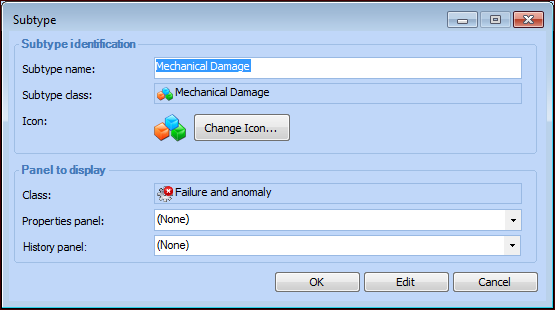
41. Click the Administration menu, Performance Management Settings, and then Failure and Anomaly Sub-types. The Failure and Anomaly Subtype Settings dialog appears.
42.
43. In the Properties panel list, select the specifications panel that you created.
44.
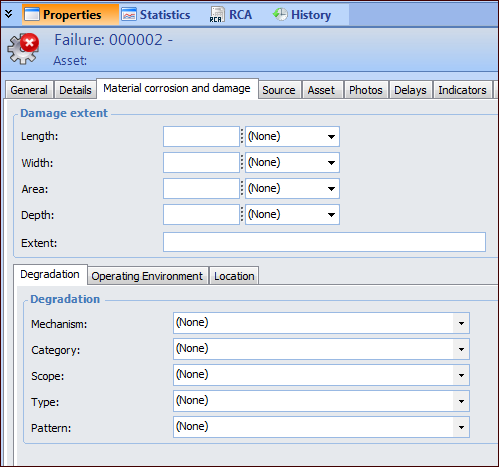
45. Click OK to close the Subtype dialog. Click OK to close the Failure and Anomaly Subtype Settings dialog.To test this, create a failure and select the Properties view, General tab. In a Subtypes box, select your custom subtype. The custom panel that you created should now be available in the failure’s Properties view. For example:Select the History view and the subtype’s Audit Info tab to test it.