Correcting Multiple Hierarchy Errors

Follow this set of procedures when more than one hierarchy error has occurred at the same location. Two or more physical swaps for a given location have been recorded incorrectly, or not at all, in APM.
The period of time between when an error occurs and when the next swap is recorded is called the “error timeframe.” Each hierarchy error will have a different error timeframe. Data that is processed during the error timeframe may be recorded against the wrong assets.
Processing a hierarchy correction erases any component swaps, correct or incorrect, entered for the location after the date of the error. Once you fix the first error, you then need to follow these procedures again to fix each swap that occurred after it. You must fix the errors in the same chronological sequence in which they occurred.
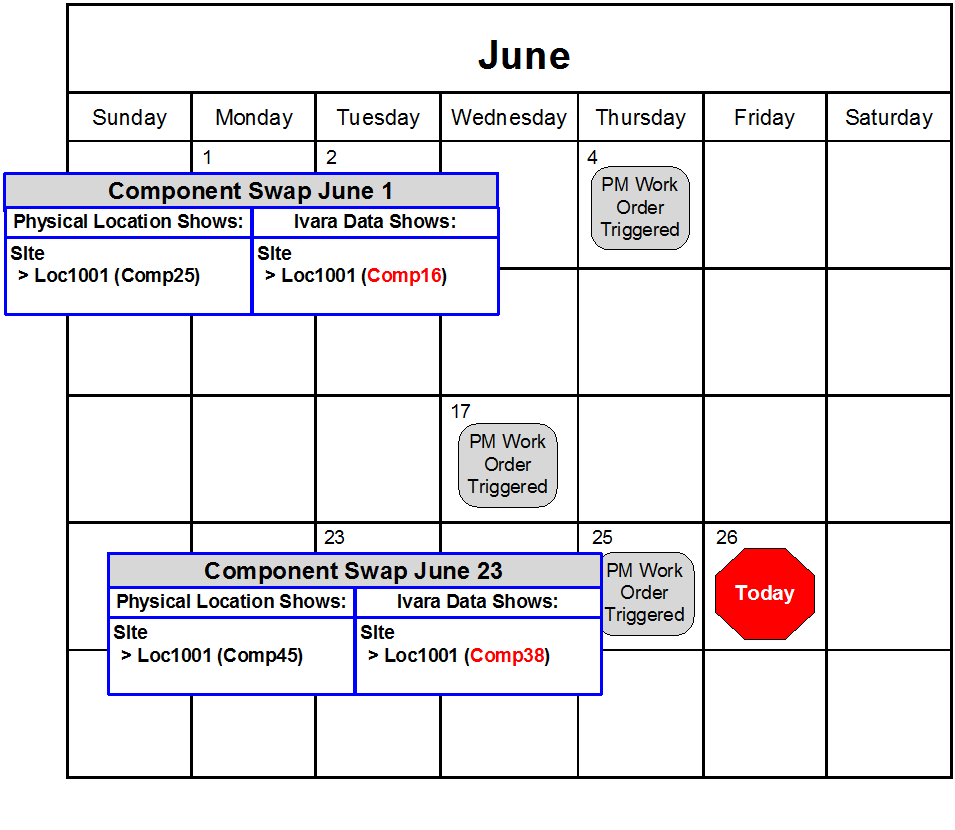
For example, say component 16 was removed and component 25 was installed on June 1, but the swap was not recorded. Then, component 25 was physically removed and component 45 was installed on June 23, but the swap in APM recorded that component 16 was removed and component 38 installed. The following graphic illustrates this example:
To fix the errors, you first need to fix the June 1st swap. Run the hierarchy correction process to remove component 16 and install component 25. Complete the procedures to update all of the costs and documents that were created during the error timeframe: between June 1st and 23rd.
Once you have fixed all of the data for the first swap, run the hierarchy corrections process again to remove component 25 and install component 45. Again, you need to update all of the costs and documents that were created during the error timeframe, from June 23 to today, June 26.
To track your corrections, write down the name/number of the assets involved in all of the corrections and the date and time they were physically installed. Then, when you are manually correcting data like maintenance costs and PM work orders, sort by the date and time they were entered to ensure that you move them to the right asset.

To Correct Multiple Hierarchy Errors

There are eight steps to correct each asset hierarchy error. Complete the steps in the order shown below, and then repeat the entire process for each hierarchy error that you need to fix.
1.
2.
3.
4.
5.

Initiating New Hierarchy Corrections

Before you complete these steps, you must read and understand the information in the introductory topic, Asset Hierarchy Corrections.
It is important to understand the hierarchy error -- how it happened, what data is affected, and what has happened since the error -- before you begin to correct the mistake. You must be able to verify that the data APM identifies is correct.

To Initiate a New Hierarchy Correction

1.
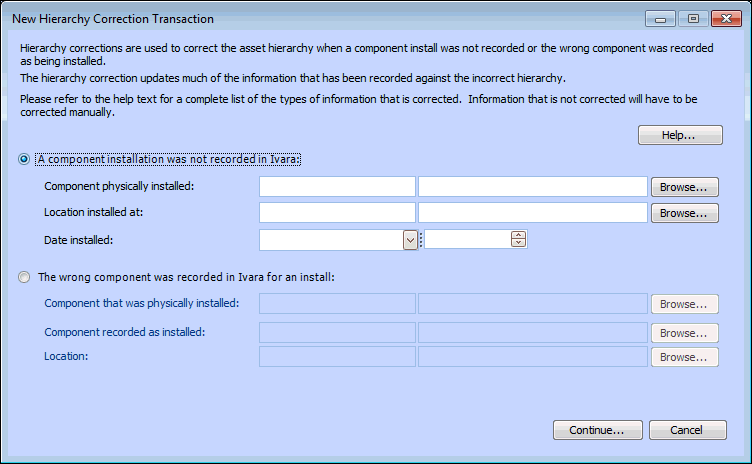
From an asset, click the Tools menu, New, and then Hierarchy Correction. The New Hierarchy Correction Transaction dialog appears.
From the site, click the Tools menu, New, and then Hierarchy Correction. The New Hierarchy Correction Transaction dialog appears.
2.
Select the problem you are correcting: A component installation was not recorded in APM or The wrong component was recorded in APM for an install. When a component installation is not recorded, a component was physically removed and its replacement was installed but the swap was not recorded in APM. As a result, data collected and activities performed against the installed component continue to be recorded against the component that was previously installed.
3.
4.
5.
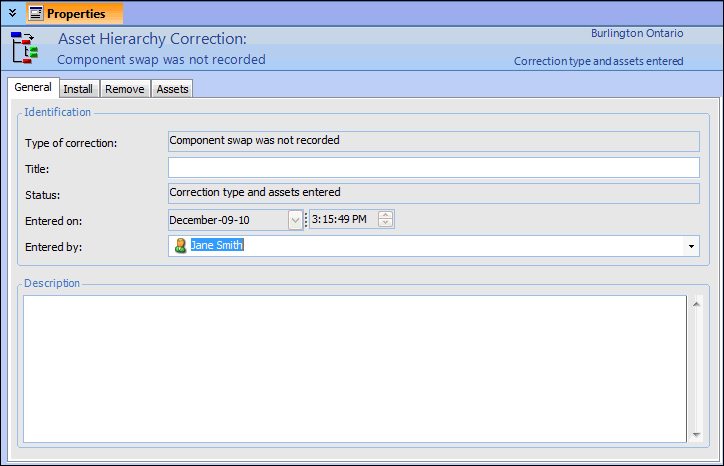
Click Continue. The Hierarchy Correction Transaction dialog appears, open to the General tab. For example:
6.
7.
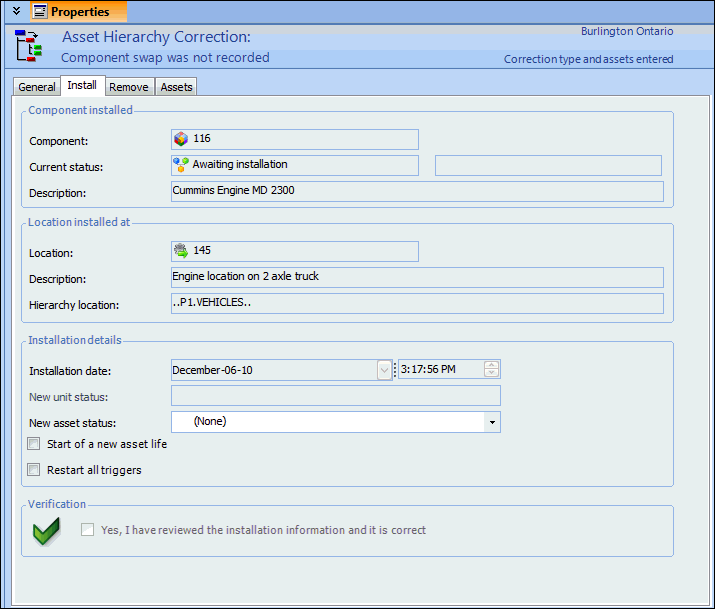
Select the Install tab to enter the data that should have been entered when the physical swap occurred.
Choose the correct New Asset Status.
8.
Review all of the information on this tab to ensure it is correct, and then select the Yes, I have reviewed the information and it is correct box at the bottom of the tab.
9.
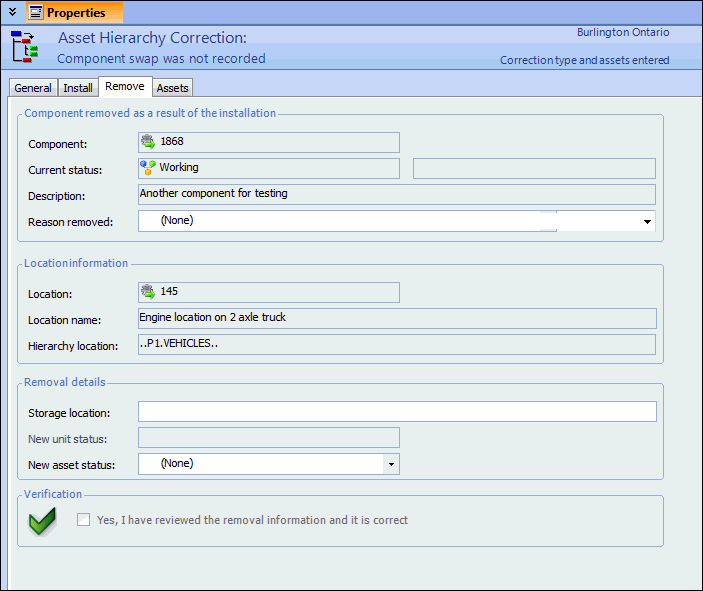
Select the Remove tab to enter the removal details that should have been entered when the physical swap occurred. For example:
10.
Review all of the information on this tab to ensure it is correct, and then select the Yes, I have reviewed the information and it is correct box at the bottom of the tab.
11.
Select the Assets tab to review the matched assets. This tab displays the asset(s) that are being recorded as removed in APM (the left-hand table) and matches them to the asset(s) being recorded as installed in APM (the right-hand table). If an asset in the left-hand table is not matched to its replacement asset in the right-hand table, you can select the matching asset manually.
12.
Verify that the lists of assets are matched correctly, and then select the Yes, I have reviewed the information and it is correct box at the bottom of the tab.
Note: You must be absolutely sure that you have selected the correct assets. If the matched assets are not correct, click Cancel to stop this process. Determine the exact hierarchy correction error, and then start over at step 1. There is no way to undo an incorrect hierarchy correction.
13.
Click the Continue button. Five new tabs appear in the dialog: Indicator Readings, Work Order Tasks, PM Work Orders, Work Requests, and Verification. These tabs provide information about the documents APM will automatically update as well as the documents that can be manually updated.
 

Processing Hierarchy Corrections

Once you have removed the maintenance costs from the assets in the current hierarchy, you can process the hierarchy correction. Processing the correction transfers the indicator readings, work requests, and work order tasks to the correct asset(s).

To Process the Hierarchy Correction

1.
2.
Select the Indicator Readings tab to review the list of indicator readings that will be corrected. For technical information on how indicator readings will be fixed, see Indicator Readings. Once you have verified the information, select the Yes, I have reviewed the information and it is correct box at the bottom of the tab.
3.
Select the Work Order Tasks tab to review the list of work order tasks that will be corrected. For technical information on how work order tasks will be fixed, see Work Order Tasks. Once you have verified the information, select the Yes, I have reviewed the information and it is correct box at the bottom of the tab.
4.
Select the PM Work Orders tab to review the list of all PM work orders that are affected by this hierarchy correction. APM does not review, update, or cancel these PM work orders. Make note of the work orders and standard jobs that you will need to review. Once you have verified the information, select the Yes, I have reviewed the information and it is correct box at the bottom of the tab.
5.
Select the Work Requests tab to review the list of work requests that will be updated. For technical information on how work requests will be fixed, see Work Requests. Once you have verified the information, select the Yes, I have reviewed the information and it is correct box at the bottom of the tab.
6.
Select the Verification tab. When you have reviewed all of the information provided on the Hierarchy Correction Transaction dialog, click the All Information Has Been Verified button. When all of the check boxes are checked, the Process Correction button becomes available.
Note: You must be absolutely sure that you have selected the correct assets. If the data listed on the tabs do not look correct to you, do not process the correction. There is no way to undo the asset hierarchy correction once you click Process Correction.
7.
Click the Process Correction button to update the asset installation history, to correct the indicator readings, and to update work requests and work order tasks.
Keep the New Hierarchy Correction Transaction dialog open until you have reviewed all of the other documents that may have been affected by this component swap error. The remaining topics in this set of procedures will show you how to review and update these documents.

Reviewing PM Work Orders and Standard Job Triggers

PM work orders are work order that are generated from standard jobs. APM lists all of the PM work orders that you need to review in the PM Work Orders tab of the Hierarchy Correction Transaction dialog. You can note the work order numbers, flip between the Hierarchy Correction Transaction dialog and the Work Orders view to ensure you review all of the work orders, or export the list to Excel to print it.
Once a work order is triggered, you cannot undo the triggering. You can create an exception triggering rule to reset the next triggering. Once the next work order is triggered using the exception triggering rule, the rule will be reset and work orders will continue to trigger correctly.
You need to review the triggering rule for both the incorrect component and the correct component. If the incorrect component triggered an unnecessary standard job, you will need to cancel the standard job and create an exception triggering rule so the next PM work order occurs at the right time. If the correct component did not trigger a standard job, you can manually trigger one if necessary or create an exception triggering rule so the next PM work order occurs at the right time. You need to understand what the data currently looks like and what it should look like in order to determine which standard jobs need what exception triggering rules.
If you use triggering cycles, you need to understand where you are in the cycle and where you should be in order to create the correct exception triggering rule.
Each PM work order in the list states the standard job that triggered it. To review the PM work orders and correct the standard job triggers, you first verify the information in the PM work order, making any necessary changes. Then you open the standard job and verify that the trigger is correct, again making any necessary changes. You need to check each PM work order listed, and check each standard job on the location or the component that triggered a PM work order.

To Review PM Work Orders

1.
Go to the site, and then select the Work Management view, Work Orders tab, and then the Work Orders tab.
2.
3.
To verify the asset to work on, open the Properties view to the General tab. Select a different asset if necessary.
To verify the asset to charge, select the Charging Info tab. Select a different asset if necessary.
To verify that a planned component swap is correct, select the Component Activity tab. Select different assets if necessary.
4.

To Create an Exception Triggering Rule

5.
Select the site’s Reliability Program view, and then the Jobs tab. Open the standard job that triggered the PM work order you just corrected.
6.
Select the Triggering tab. Determine whether or not this standard job needs an exception triggering rule. If it does, complete steps 7 to 9. If not, skip to step 10.
7.
Click Create Exception Rule. The Exception Triggering Rule dialog appears.
8.
Click the box next to Next triggering uses this exception rule, and then enter the date or rule clauses needed to trigger the work order correctly. For detailed steps to create an exception triggering rule, please see Creating an Exception Triggering Rule.
9.
Click OK to save the exception triggering rule and close the dialog.
10.
11.
 

Correcting Downtime Incidents

Any downtime incidents created during the error time frame for the wrong component (either the component that was uninstalled or the component that was incorrectly identified as having been installed) or any of the component’s descendants need to be updated to ensure that the downtime is reported against the correct asset, that any downtime costs are calculated using the correct asset’s formula, and that the asset life reference is correct. If the downtime incident report no longer applies to the component, you can delete it.

To Correct Downtime Incidents

1.
Go to the site’s Performance Management view, Failures and Downtime tab, Downtime tab.
2.
3.
Click Edit. Verify the following information, making any necessary changes:
Verify that the downtime is being recorded against the correct asset on the General tab. If not, select the appropriate asset. When you change the asset, APM automatically recalculates the downtime costs using the downtime rules on the new asset.
4.
5.
If the incident needs to be deleted, right-click it in the list and click Delete. A message appears asking you to confirm that you want to delete this downtime incident. Click Yes.
6.
 

Correcting Asset Transfers

If an asset transfer document was created for any of the assets involved in the hierarchy correction during the error time frame, you will need to review the asset transfer document and correct the asset listing. When you transfer or receive assets, you change the assets that are available at your site. If the transfer document lists an asset other than the one physically transferred, both sites will have incorrect asset data. Asset transfer documents need to be updated to list the correct assets so that the sites have access to the correct asset data.

To Correct Asset Transfers

1.
Go to the site’s Asset view, Utilities tab. Open the asset transfer document that transferred any of the components involved in the asset hierarchy correction during the error time frame. The Asset Transfer Document view appears, open to the General tab.
2.
Select the Assets tab. Note the asset(s) listed and the transfer status.
3.
If the transfer document has been sent for or received approval, select the Transfer Document menu, and then Redraft. Choose the correct asset. You will need to send the transfer document for approval again.
4.
Note: The assets do not get physically transferred back. The transfer documents are necessary to correct the data in APM so that both sites have records that match their assets.