Configuring a Data Source for the PI Plugin

Before configuring indicators to collect online readings, you must define the data source in APM. This definition brings together information about the service provider, the PI plugin, and the connection to the target server. This topic explains how to configure a data source for the PI plugin.
Note: Before creating the data source, you must have installed and configured the prerequisite PI SDK from OSIsoft. Make sure that the connection to the PI server is active. When creating the data source, you must connect to the server to record the connection string.
Note: If you are using the APM on-premises ODC agent, you must create and configure the data source on the premises. It’s easiest to do this is on the actual agent computer. However, you can also set up the data source in the local network context on a computer with the OPC, PI, or DB components installed.

To Configure a Data Source for the PI Plugin
1.
From the Site window, select the Inspection Management view and the Settings tab. Select the Indicators tab and the Indicator Settings node in the tree.
Tip: You can also click the Administration menu, Inspection Management Settings, and then Indicator Management. The Indicator Settings window appears.
2.
Select the ODC tab and then the Data Sources tab.
Note: You can also create a data source that is available to all sites that use the Online Data Collection module. On the Enterprise window, select the Services view, ODC tab, and then the Data Sources tab.
3.
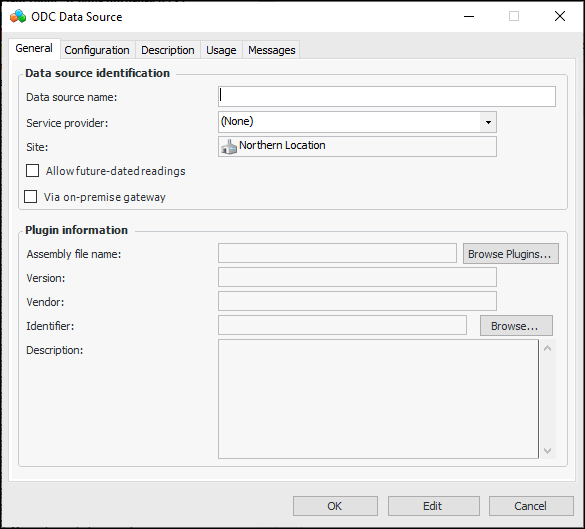
Click New. The ODC Data Source dialog appears.
4.
5.
6.
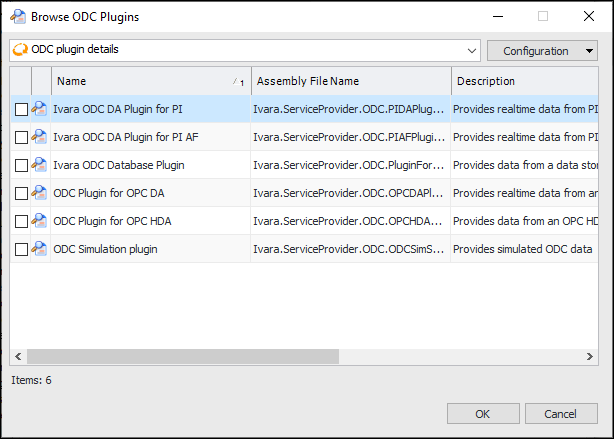
Click Browse Plugins. The Browse ODC Plugins dialog appears.
7.
Select Ivara ODC Plugin for PI and click OK. On the ODC Data Source dialog, the Plugin information area is populated.
8.
To permit future-dated indicator readings, click Allow future-dated readings. If the server clocks are not perfectly synchronized, the ODC service is still able to return the most recent indicator readings.
Note: Not allowing future-dated readings only prevents readings from having a future date, not a later time today.
9.
10.
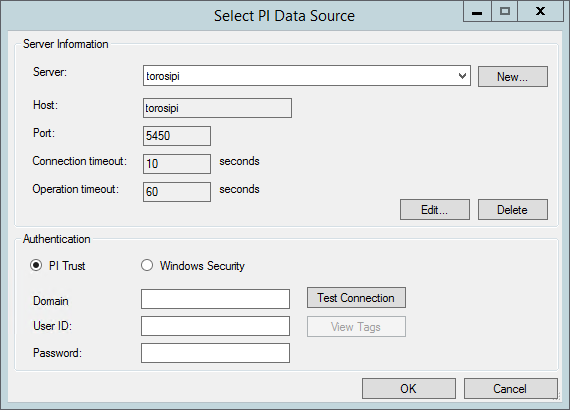
Click Browse to open the Select PI Data Source dialog. Select the PI server path from the list. For example:
Note: To create PI server path on the local machine, refer to the PI SDK documentation.
11.
Tip: You can click View Tags to open the Tag Search dialog, where you can review the list of tags that will be available when configuring indicators.
12.
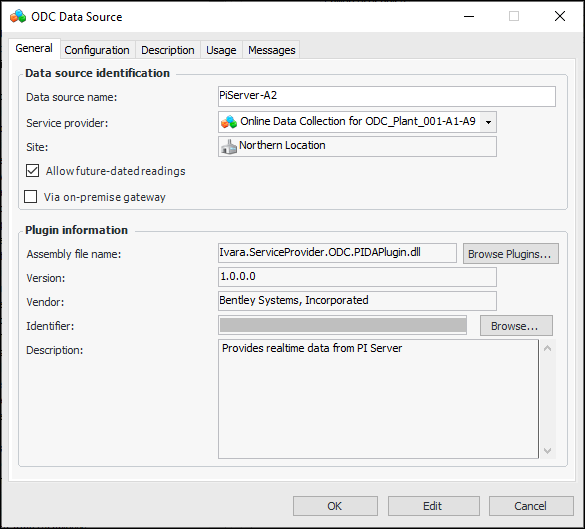
The ODC Data Source dialog, General tab displays information about the plugin and connection. For example:
The Identifier value (obscured in the example above) is encrypted and displayed as hashed for security reasons.
13.
Select the Configuration tab to enter additional configuration information about the data source.
14.
Select the Description tab to enter additional information about the data source.
Tip: After you have configured indicators and started collecting online data, you can return to the ODC Data Source dialog to see information about how the data source is used. Select the Usage tab to see which indicators use the data source. Select the Messages tab to view ODC message logs.
15.
Click OK to save the data source and close the dialog.