|
Changing Column Properties on an Ad Hoc Basis
Changes made on an ad hoc basis are not saved to the table configuration beyond your APM session unless you save them specifically. To save your changes, see Saving Ad Hoc Changes in the Current Configuration or Saving Ad Hoc Changes as a New Table Configuration.To Change Column Properties on an Ad Hoc Basis
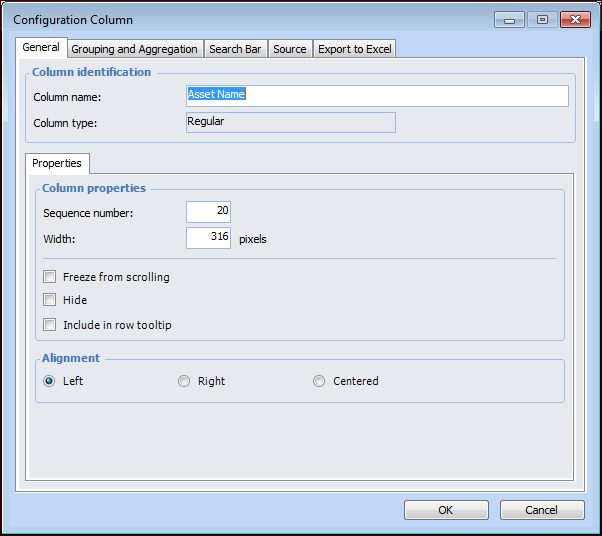
2. Right-click the column and click Properties. The Properties dialog appears, open to the General tab.
3. On the Properties tab, enter the appropriate information.
When the Freeze option is selected, the column appears frozen at the left of the table configuration. Freezing the column enables you to see the information it contains as you scroll across to view other columns. Any column to the left of the frozen column will also be frozen.
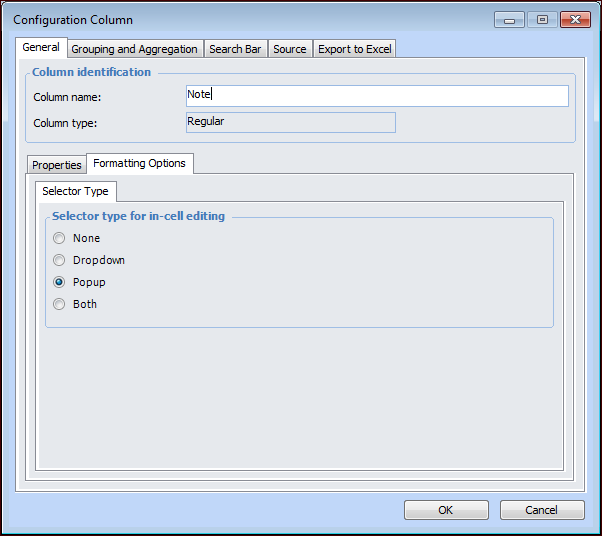
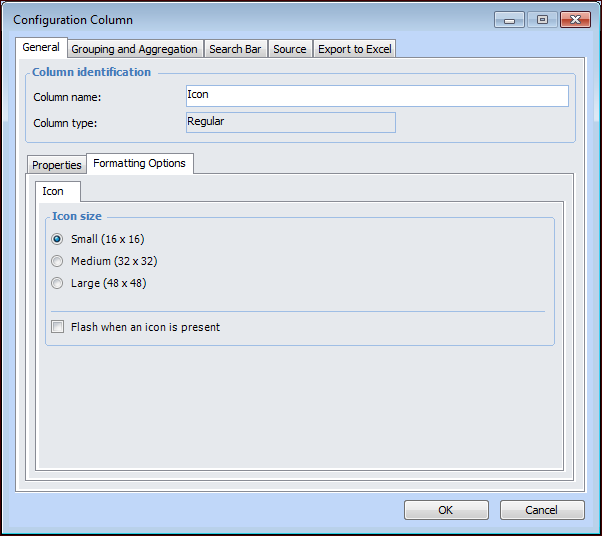
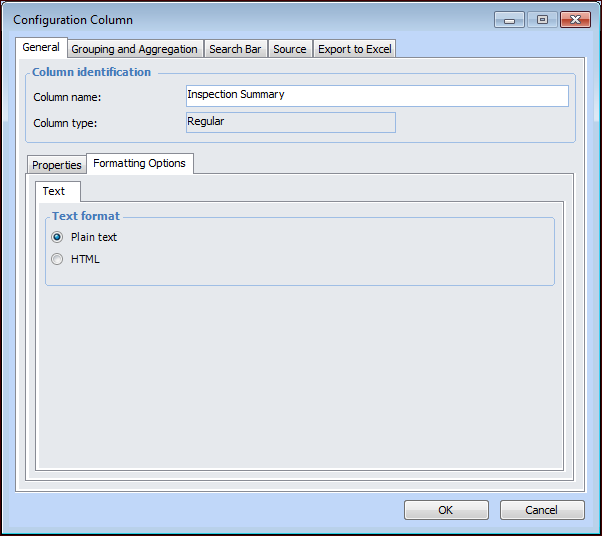
4. Select the Formatting Options tab. This tab is available for column types that support it, for example, icon, strings that support in-cell editing, date and time, and HTML text. The options available on the tab differ according to the column. Here is an example for a string column that supports in-cell editing:
• None - you cannot edit data within the table configuration.
• Dropdown - you can open a list of items from the table cell to select the correct one.
• Popup - a dialog appears from which you can select the correct item.
• Both - you can use either a drop-down list or a popup dialog to select the correct item.
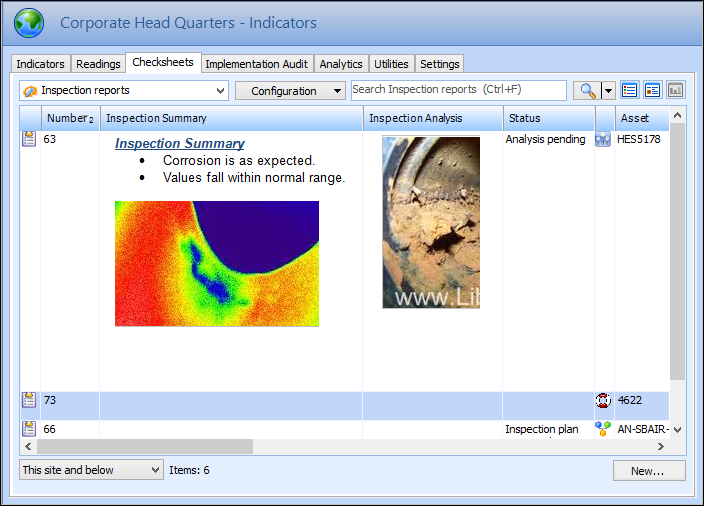
Tip: If the column contains graphics or photographs, you can display them in tables as HTML. Select HTML and click OK. In the table, the content of the column is rendered as HTML. For example:
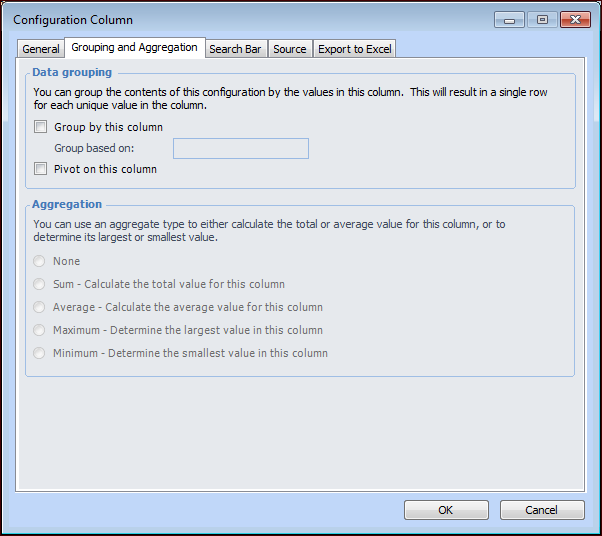
5. Select the Grouping and Aggregation tab to set options for data groups. Once you have created a data group, you can include a summary of any numeric data available for the items in the group. For example, in a table configuration of assets, you might group the assets by asset type. If you include the Priority Ranking column in the configuration, you could then include the average priority ranking in the group summary. For more information about data groups and aggregations, see Creating Data Groups in Table Configurations.
None: No data aggregation is displayed for this column.Sum: All of the values in the column are added together to produce a total value.Average: All of the values in the column are added together and divided by the total number of rows to produce an average value.Maximum: The highest value in the column is selected.Minimum: The lowest value in the column is selected.
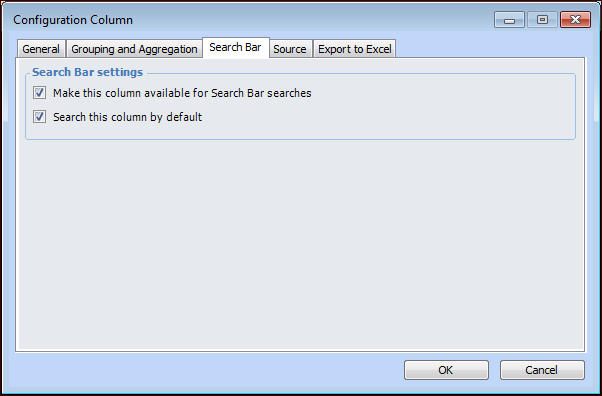
6. Select the Search Bar tab.
7. Click OK. The column’s appearance changes, but the changes will not be saved longer than your current session.