|
Creating a Current Practice Review
To Create a Current Practice Review
1.
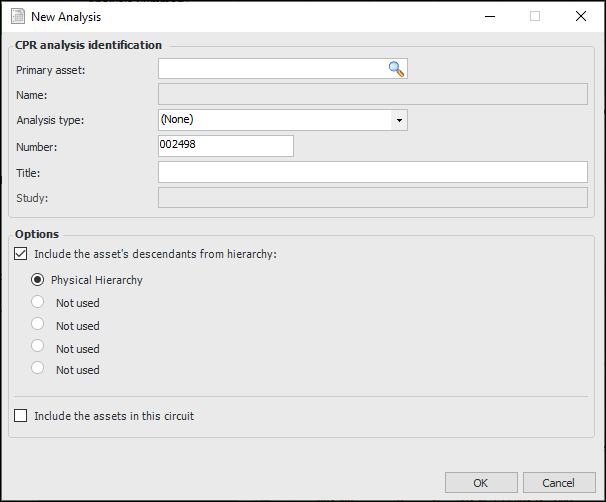
2. Click New. The New Analysis dialog appears.Tip: You can also create a review by opening an asset and selecting the Strategy Development view. On the Strategy Development tab, select the Analyses tab. Click the New list and then CPR. The New Analysis dialog appears, and the primary asset information is filled in.
4. The Analysis type box shows the default type for current practice reviews, if a default has been assigned. An analysis type is a collection of preferred options that can be changed as needed on the review. You can change or select the analysis type to quickly set default options for the review.
6. In the Title box, the default name for the review follows this pattern:Asset type: Primary asset - CPR
7. To include the primary asset’s descendants in the review, select Include the asset’s descendants and select the asset hierarchy.
8. Click OK. If you are including the asset’s descendants in the review, a progress dialog might appear as the review is created. The Strategy Development Analysis window appears. The Implementation view, Action Plans tab is shown.
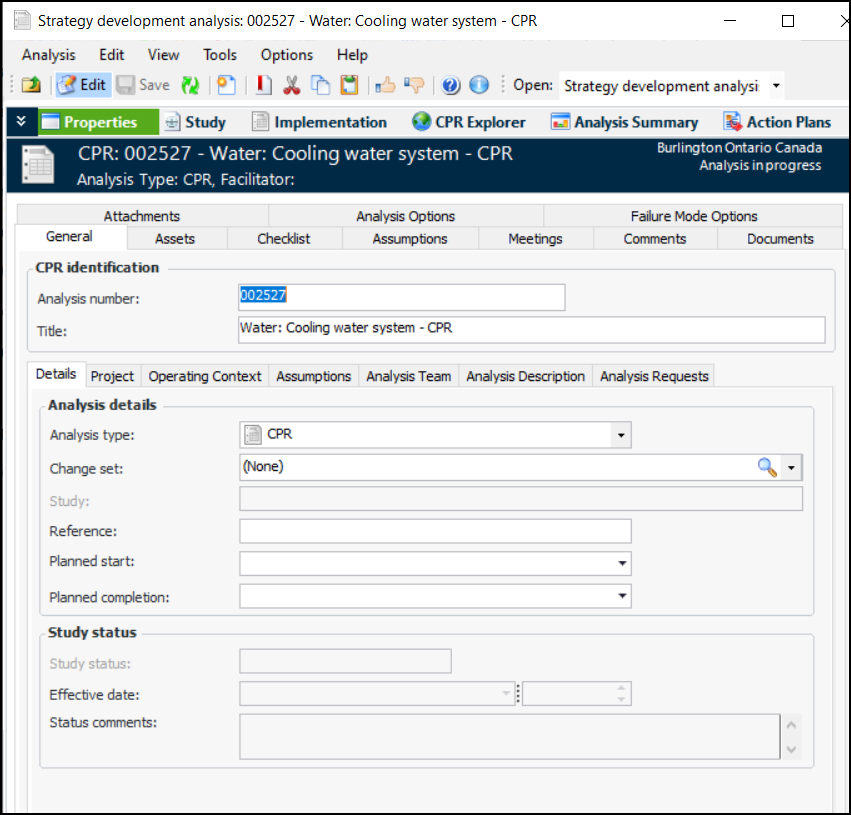
10. To set the general properties of the analysis, select the Properties view. The General tab displays information about the review. For example:
11. The Details tab displays the analysis type, if one has been assigned to the analysis. You can select an analysis type from the list to set default options.
15. On the Project tab, you can add the review to a reliability project and associate the review with a project task. Reliability projects are typically used to organize and track analyses and objects. They usually use project tasks rather than work orders.
16. On the Operating Context tab, you can record the operating context statement for the asset. For more information, see Recording the Primary Asset’s Operating Context on a CPR.
17. Select the Analysis Description tab to record additional information about the review.
18. On the Analysis Team tab, you can add team members, identify the facilitator, and assign roles. For more information, see Adding Team Members to a Current Practice Review.Tip: If the review was created when an analysis request was processed, the Analysis Requests tab displays the request.
19. Select the Assets tab to view information about the primary asset or system and the other assets in the analysis. You can change the primary asset by clicking Change and selecting another asset.
20. On the second Assets tab, you can view the assets in a list or select the Hierarchy tab to see the relationship between assets. You can add new or existing assets and exclude assets from the review. You can also double-click an asset to open, and if required, edit it. For more information, see Adding Assets to a Current Practice Review.
21. The Comments tab helps the analysis team keep track of their work in analyzing assets. For more information, see Entering and Reviewing Comments on Current Practice Reviews.
22. Use the Meetings tab to record team meetings. For more information, see Recording Team Meetings on a Current Practice Review.
23. The Checklist tab displays standard tasks for your organization’s analysis projects. For more information, see Working with the Current Practice Review Checklist.
24. Select the Documents tab to browse for standard documents that are relevant to the review.
25. Now and while the review progresses, you can document it using the Attachments tabs.Note: For more information about attaching a file, folder, note or URL to a document, see Adding Attachments to Objects.
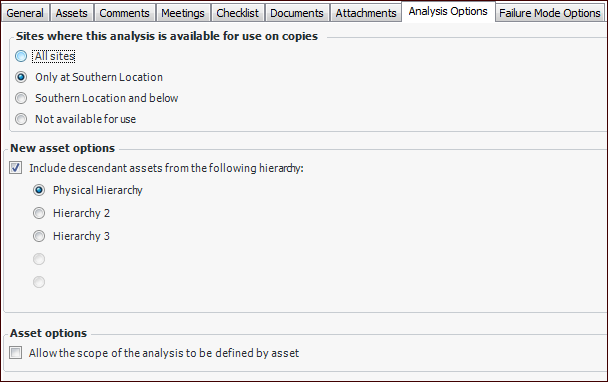
26. Select the Analysis Options tab.
28. The New asset options area shows the settings you selected on the New Analysis dialog when creating the analysis. If you intend to add assets, you can select a different hierarchy.On the Assets tab, you can provide a description of the scope covered by the analysis. The same asset can be added to the analysis as many times as required. For more information, see Working with Asset Scope on a Current Practice Review.
30. Select the Failure Mode Options tab to change the default settings for the review. For more information, see Creating a Current Practice Review.
31.
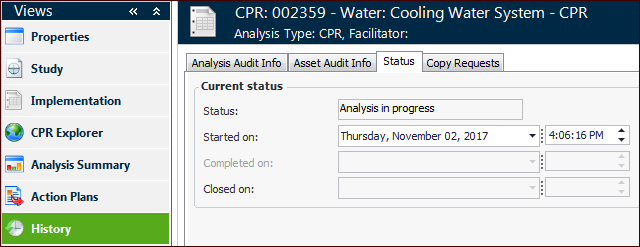
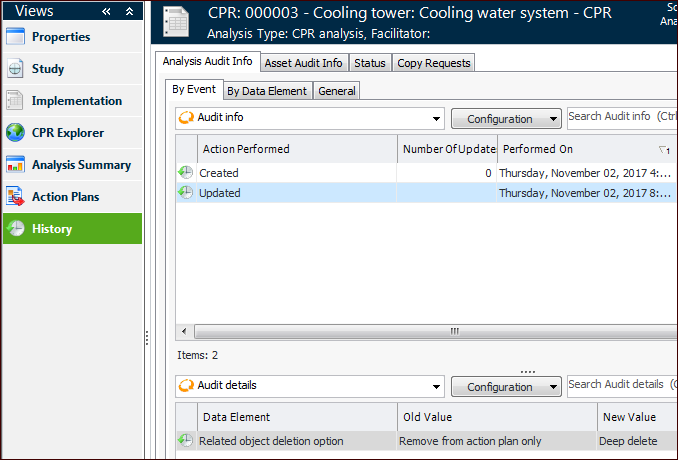
32. On the History view, Analysis Audit Info tab you can monitor the status of the review after it is created.
33. On the History view, select the Copy Requests tab when you wish to view failure mode copies for which the review was the source or target. For more information, see Copying CPR Action Plans.