|
Creating an Asset Condition Analysis
Note: Before the analysis can be carried out in APM, settings must be defined for your organization. For more information, see Introduction to Asset Condition Analysis.To Create an Asset Condition Analysis
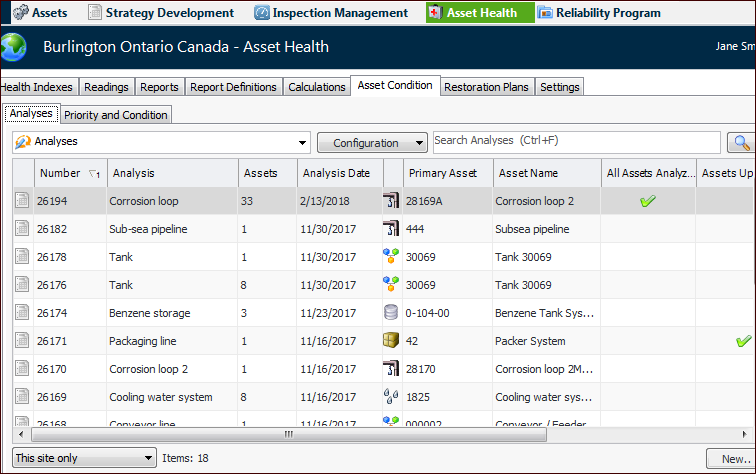
1. Select the site’s Asset Health view and then the Asset Condition tab, Analyses tab. This tab lists existing analyses, as well as the number of analysis assets, dates, sites, and statuses for each analysis. For example:Tip: You can also launch the analysis from the Asset window. Select the Asset Health view, Condition Analyses tab.
2.
Note: If you wish to add, remove, or change the rule set after the analysis has been saved, make sure that editing is enabled and click Change Rule Set. In the Change Analysis Rule Set dialog, you can view the current rule set’s criteria and either select a new rule set or delete the set. When you click OK, APM adds any new analysis criteria to the analysis and removes any criteria that are no longer needed.Note: If you change the rule set after scores have been calculated, the Worksheet view shows the previous analysis results until you recalculate scores.
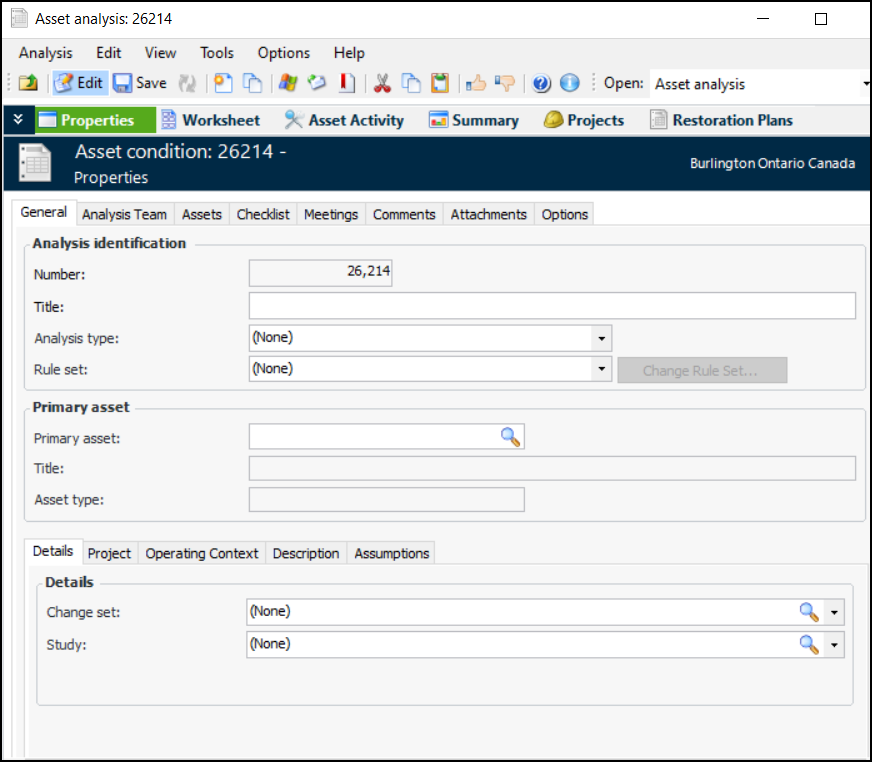
4. Select the primary asset to be analyzed, if appropriate. If you select a primary asset, it is added to the Assets tab automatically. When you browse for other assets to add to the analysis, only the primary asset’s descendants are available for selection.
5. On the Details tab, you can select a change set from the list. This is usually a change authorization or change set number from a Management of Change (MOC) system.
8. On the Project tab, you can add the analysis to a reliability project and associate the analysis with a project task. Reliability projects are typically used to organize and track analyses and objects. They usually use project tasks rather than work orders.
9. On the Operating Context tab, you can record the circumstances in which the asset operates.
10. Use the Description tab to describe the analysis, its purpose, and so on.
11. On the Team tab, you can add team members and identify the facilitator. For more information, see Adding Team Members to an Asset Condition Analysis.
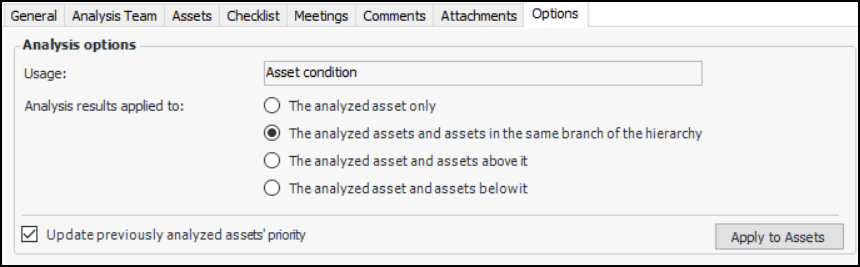
12. Select the Options tab.
• The analyzed asset only – Only the assets included in the current analysis have their consequence priority numbers or conditions updated
• The analyzed assets and assets in the same branch of the hierarchy – Only the assets included in the analysis and their descendants and ancestors in the hierarchy are updated
• The analyzed asset and assets above it – Only the assets included in the analysis and their ancestors in the hierarchy are updated
• The analyzed asset and assets below it – Only the assets included in the analysis and their descendants in the hierarchy are updated
This option takes into account the selected Analysis results apply to option. For example, if descendant assets are to be updated and Update previously is selected, all assets below the analysis asset in the hierarchy are updated, whether they have been analyzed separately or not.If Update previously is not selected, descendant assets are updated until the system identifies an asset that has been analyzed separately. At that point, the update process stops.